

Dec
TIN TỨC
The perfect solution for families who missed the chance to store umbilical cord stem cells
If parents missed the chance to store stem cells from the umbilical cord at birth, there’s no need to worry a valuable opportunity still remains storing stem cells from baby teeth. Scientists are advancing and refining techniques to extract stem cells from the pulp of milk teeth, giving families an accessible and convenient option to preserve their child’s stem cells.
Stem cells derived from baby tooth pulp are considered highly valuable and are increasingly being applied in medical research and treatment.
Dental Pulp Stem Cells (DPSC) are a valuable source of highly regenerative cells collected from children’s baby teeth. The stem cells found inside the dental pulp are Mesenchymal Stem Cells (MSCs) — a versatile type of stem cell capable of differentiating into multiple cell types, similar to MSCs derived from bone marrow, adipose tissue, or the umbilical cord.
DPSC offer strong therapeutic potential in treating degenerative conditions such as osteoarthritis, diabetes, stroke complications, multiple sclerosis, heart failure, and liver fibrosis; as well as immune-related disorders like lupus. They can also be used in therapies aimed at slowing aging, balancing hormones, and supporting overall regenerative health.
The benefits of preserving your child’s baby tooth stem cells
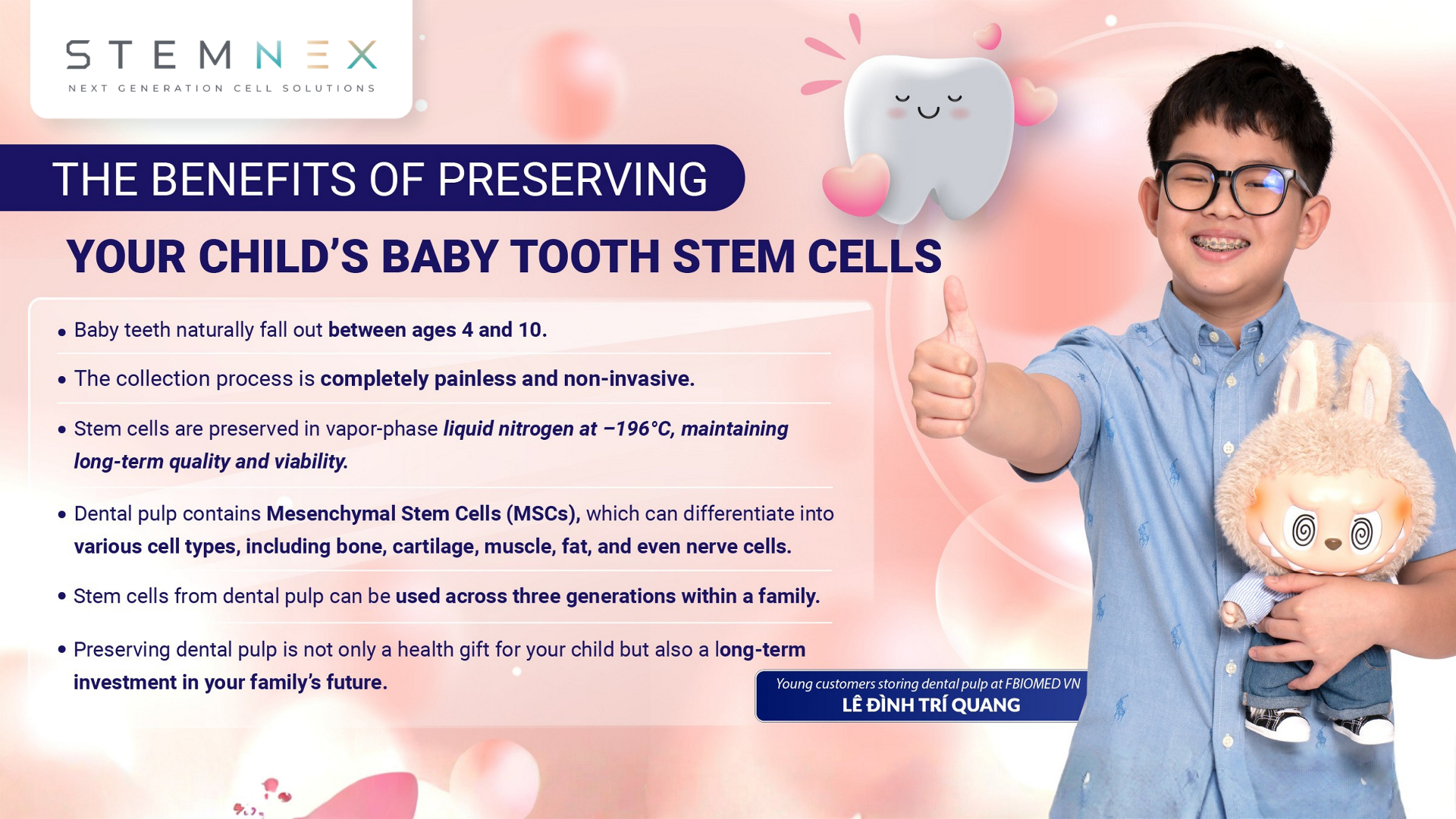
Research has shown that the stem cells found in dental pulp are Mesenchymal Stem Cells (MSCs). In summary, Dental Pulp Stem Cells (DPSCs), located in the tooth-forming region, offer several key advantages:
1) Baby teeth naturally fall out between ages 4–10, when stem cells are still young, strong, and minimally affected by environmental factors or aging.
2) The collection process is painless and non-invasive, typically performed when the baby tooth falls out naturally, ensuring complete safety for the child.
3) Stem cell samples are preserved in vapor-phase liquid nitrogen at –196°C, maintaining long-term cell viability and optimal quality.
4) Dental pulp contains Mesenchymal Stem Cells (MSCs), which can differentiate into multiple cell types such as bone, cartilage, muscle, fat, and even neural cells.
5) DPSCs may be used for up to three generations within the family, potentially benefiting the child, parents, grandparents, or siblings who share genetic compatibility. Choosing to store dental pulp stem cells is not only a health gift for your child but also a long-term investment in your family’s future.
How can dental pulp stem cell technology help with anti-aging?
The discovery of dental pulp stem cells (DPSCs) has opened up wide applications in regenerative medicine, especially in the treatment and prevention of various conditions such as dermatological disorders, alopecia areata, and reproductive health support for both women (uterine rejuvenation) and men (enhancing fertility and ejaculation function).
DPSCs are also used in advanced wound-healing therapies and skin-surface regeneration, such as biological skin treatments that improve firmness, reduce wrinkles, and slow down wound-healing decline and skin aging. As a result, aging tissues can be effectively rejuvenated.
Transplanting these cells into blood vessels can stimulate the formation of new blood cells, playing an essential role in tissue regeneration. In addition, collagen regeneration has been shown to be a comprehensive treatment approach for damaged or aging skin. Their ability to modulate weakened immune responses also suggests the potential use of DPSCs in managing immune suppression.
Remarkable Medical Applications of Dental Pulp Stem Cells
Many experts agree that dental pulp stem cells offer significant benefits in treating conditions such as heart disease and blood cancers. While the advantages of banking dental stem cells may not be immediately visible, investing in this form of stem cell preservation is truly a valuable gift—for both our children and ourselves.
Many families have expressed regret when their children develop chronic illnesses and no stem cells were preserved at birth. Today, however, stem cells can be stored through exfoliated baby teeth, bringing renewed hope.
Studies and clinical observations have shown that dental pulp stem cells may contribute to the treatment of cardiovascular diseases, diabetes, Parkinson’s disease, cancers, spinal cord injuries, retinal disorders, endocrine conditions, kidney and liver diseases, muscular dystrophy, and many other serious health issues.
Thus, the key to successful stem cell therapy lies in the extraction and cultivation of the cells. This ideal process enables patients to generate a large number of stem cells from their own bodies. In this way, individuals can cryopreserve stem cells from discarded baby teeth during childhood, or from wisdom teeth and molars later in life, allowing them to benefit from the powerful regenerative potential of these valuable cells.
Children’s stem cells can be collected from baby teeth and may even be obtained from third molars until around the age of 22. Preserving baby teeth is highly encouraged and considered a long-term health investment. These stem cells can potentially be used for treatment at any time—either for the child or their siblings. Today, many parents are aware that stem cells can be extracted from baby teeth, commonly referred to as dental stem cells.
Key Highlights of Storing Dental Pulp Stem Cells at STEMNEX ASIA
✔️ The bank operates in receiving, preserving, storing, transporting, and supplying: umbilical cord tissue, umbilical cord tissue–derived stem cells, adipose-derived stem cells, and dental pulp stem cells, with a commitment to following AABB international standards.
✔️ Flexible storage plans: 10 years, 20 years or up to 30 years.
✔️ Triple-value compensation in the event of sample damage.
✔️ Partnerships with reputable dental clinics nationwide, ensuring a smooth and convenient collection process.
✔️ Stem cell samples are preserved in vapor-phase liquid nitrogen at –196°C, maintaining optimal cell quality and viability.


